A Set of Don's Thoughts About Time
The concept of
"Time"
is a thing
 that dominates virtually every aspect of our lives, attuned to today's rigid & unflinching regularity of hours, minutes and seconds
We all know of this today as something that "ticks" which began
( an uncertain view, see below? )
with the
creation
of our
universe
about 13.8 billion years ago…
View a video on some
historical
perspectives of time & a video by the well-known British scientist, Jim Al-Khalili
"On the Nature of Time According to Modern Physics"
I also created a website a few years back about some historical perspectives around time that shares further
info
Scientific
perspectives
show that time is known today as a
Measure of Change Within a Physical System
and therefore could not have been available before our universe…
alternatively, if it is just a
Property of Existence
itself, then something akin to time might have existed
eternally
in a higher-dimensional space or in a quantum sense—not very likely in my opinion!
The events that surround our daily
lives
have existed since we were apes, millions of years ago—each are & were ***exactly*** the same everywhere on Earth:
The daily rising at various times of the Sun to the East
( named
&
defined
in the Neolithic Era ),
crossing the sky & setting to the West
Our weather changed with our seasons from spring to summer, fall to winter
We were all awakened in the morning with the arrival of light & returned to sleep when it became dark!
Various features of time ( like hours & minutes ) are described below & were named as such as they were invented by early mankind
In the late summer of 2025 I started gathering some various concepts of time
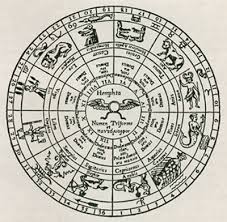 ( a Sumerian view; details are below )
and created this interesting
Report on Time
using AI
( ChatGPT )
to examine what time might be…
an interesting read & a great introduction!!
( a Sumerian view; details are below )
and created this interesting
Report on Time
using AI
( ChatGPT )
to examine what time might be…
an interesting read & a great introduction!!
A book named
Universal History of Numbers: From Prehistory to the Invention of the Computer
was written by Georges Ifrah ( translated by David Bello ) in the late '90s:
"A wonderfully comprehensive overview of numbers & counting spanning all the inhabited continents as far back in time as records will allow us to look.
Beyond the ancient Babylonians, Sumerians, & Indians, Ifrah takes us farther south into Africa to examine an early decimal counting system & into ancient Mexico to reconstruct what we can of the Mayan calendar & numerical system.
His thoughts share that he wants
'to provide in simple & accessible terms the full & complete answer to all & any questions about the history of numbers & counting, from prehistory to the age of computers',
which led him to wander the world for 10 years in the '90s, studying & learning;
the scholastic pilgrim returned with amazing stories to tell, making the book truly universal"
Today, most adults awaken with a time-based device: our iPhones, an alarm-clock, an automated light, etc & we return to sleep when we are tired
Measuring time-based
events
by us during a day didn't start until
civilizations
began to form several thousand years ago in the
Mesopotamian
area in the center of
West Asia…
Previously, our
ancestors
had lived in Africa several million years ago, sleeping in trees at night for safety whilst foraging for food during the day.
They later lived in caves, discovered fire & making it burn to be warm & to cook the meat.
They broke rocks to form the sharp chisels that cut their meat & helped them skin their kills for blankets & warm clothes, with our
Homo Sapiens
species arriving there perhaps 300,000 years ago, eventually surpassing all other
human species
( an hour-long YouTube report )
Looking further back at life on our planet, the existence of all life required the earlier stars to explode, creating from their hydrogen & helium molecules the essential parts of what makes us what we are, carbon, iron, etc.
The very 1st cell of life to replicate itself was clearly the result of innumerable attempts, created perhaps a billion years after the Earth was formed;
while still not yet fully understood, its formation is assumed to have occurred a very long time ago deep in the oceans around the
fumaroles
at tectonic plate boundaries, wrapping the elements of the cell with a skin.
The existence of life also totally depends on our magnetic core, which still today shields everything from the Sun's lethal radiation
While the concepts of "Time Travel" do exist
( as portrayed by Dr. Who on TV, enjoyably watched by me around 1963! ),
its not physically possible as of this writing for us to do this…
Many books have been written, some fiction
( the H.G. Wells 1895 novel, The Time Machine )
& some not
( Sean Carrols' novel, From Eternity to Here: The Quest for the Ultimate Theory of Time )…
its a fact that time does in fact
change
but in such microscopic amounts of time that its not noticeable by us
About 4,500 years ago, the ancient
Sumerian
people created a system of measuring
time
in the city of
Umma.
They established a way to use their
fingers
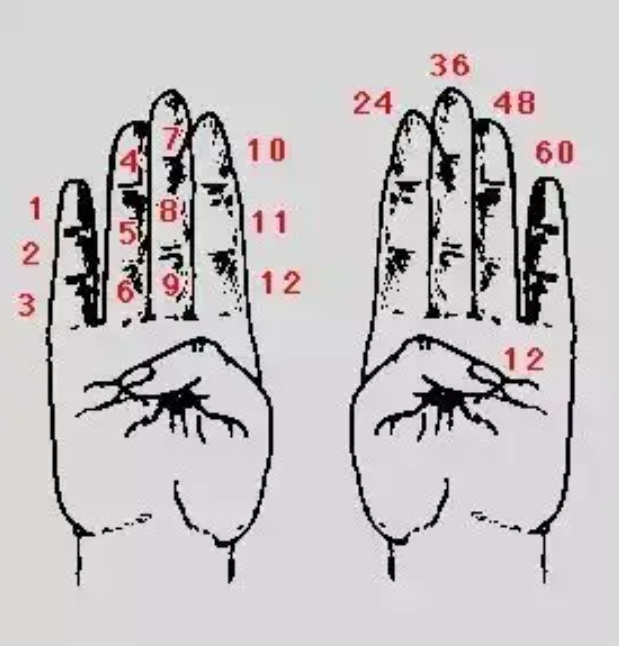 to
record
things, storing the results on
clay tablets
to
record
things, storing the results on
clay tablets
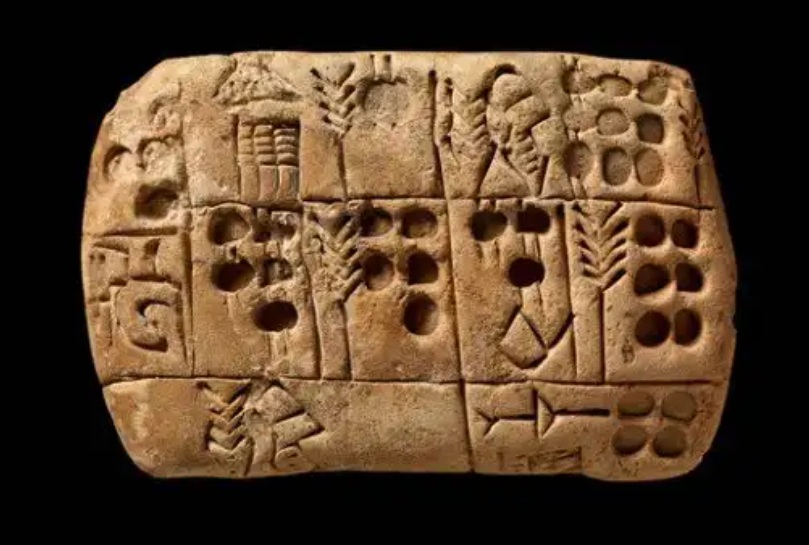 using the 3 sections of each of their fingers on their left hand to count, totaling up to 12, & with their
right hand
totaled things further: 12-24-36-48-60
using the 3 sections of each of their fingers on their left hand to count, totaling up to 12, & with their
right hand
totaled things further: 12-24-36-48-60
Subsequently, an
abacus
was invented to improve counting
Moving on from counting & time, the Sumerians created the 12 lunar cycle
calendar
( which ran at ∼354 days, rounded up to 360 )
forming 12 months at 30 days each.
What differentiated their calendar system from all other calendars of this time was the way they measured time:
calculations were all heavily based on the numbers 6, 12 & 60, & are still in use today
The Babylonians ∼3,500 years ago created a different
calendar
view
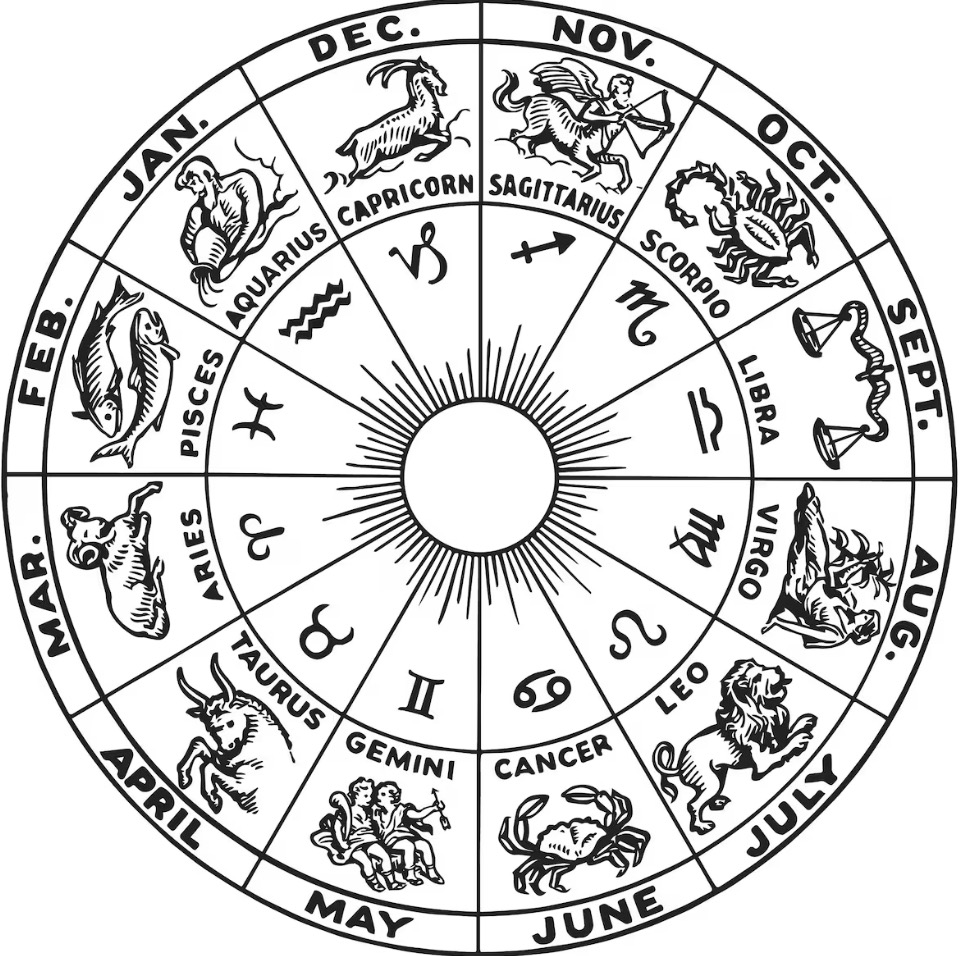 using the 12
constellations
of the many things viewable in the sky.
These are (counter-clockwise from the top-left),
the Capricorn (a Goat),
Aquarius (a Water Bearer) which represents January,
Pisces (the Latin plural of a fish), Aries (the Ram),
Taurus (the Bull), Gemini (the Twins), Cancer (a Crab),
Leo (a Lion), Virgo (a Maiden), Libra (the Scales),
Scorpio (a Scorpion) & Sagittarius (the Archer)
using the 12
constellations
of the many things viewable in the sky.
These are (counter-clockwise from the top-left),
the Capricorn (a Goat),
Aquarius (a Water Bearer) which represents January,
Pisces (the Latin plural of a fish), Aries (the Ram),
Taurus (the Bull), Gemini (the Twins), Cancer (a Crab),
Leo (a Lion), Virgo (a Maiden), Libra (the Scales),
Scorpio (a Scorpion) & Sagittarius (the Archer)
This calendar subsequently evolved to a
seven-day week,
based upon the celestial bodies that were visible to them: the Sun, the Moon and 5 planets;
they also used the approximate four-week cycle of the moon.
It was later adopted by the Greeks from the people in the Near East & the Romans then adopted it from the Greeks.
Around 46BC, Roman leader Julius Ceaser directed Sosigenes of Alexandria to devise a better
calendar
Measurements of today's time
( as of this update, September 12th 2026 )
are from
where a year takes exactly 365.2425 days,
365-days + 5-hours + 49-minutes + 12-seconds
and
where a day has precisely
23 hours, 56 minutes & ~4.09 seconds
( using "Sidereal Time" )…
this will certainly change in the future!
These were all managed by the Babylonians
( above )
in the ancient past by the use of a water clock, a
"clepsydra"
( 1st noted to have been in use around 1417BC, when the priests at Karnak were starting to determine the idea of "hours" with these )
and the use of a Greek
sundial,
providing time measures during daylight.…
This led to our
hours & minutes
in the early middle ages
Julius Ceaser restructured the Roman calendar in 46BC
( view details? )
to better cover each annual cycle that we had made around the Sun, once thought to be the Sun moving around the Earth, considered the central point of everything (!) from the then-existing 10 months to 12, changing the days in a month and the order.
The name of the 1st month in a year was changed from March to January with the 2nd month as named as February, moving March to the 3rd month.
July & August were also moved out to the 7th & 8th months & renamed as July
( which had been named "Quintilis," Latin for the fifth month )
after Julius Ceaser in his honor
and August
( named at that time as "Sextillia," sixth )
was named after Augustus Ceaser.…
The remaining months, September thru December still have names that reflect derivations of their Romanic index, September from "septem" ( seven ), October from "octo" ( eight ), etc, etc
As an interesting aside, Julian dates ( used in computer programming ) differ totally today:
a Julian date is the number of elapsed days since the beginning of a fixed cycle, invented in 1583, designed to simplify computing a difference between two calendar dates.
Today's
Gregorian Calendar
was amended in 1582 by Pope Gregory XIII to correct for the inadvertent Leap Year error:
an extra day had been inserted in the Julian calendar at the end of February every 4th year to correct for a year of 365.25 days,
but because the Romans couldn't measure time with sufficient precision, a Julian year was discovered to be too long at that time by exactly 11 minutes & 14 seconds
A view of the
Frequently Asked Questions
in Cosmology by
Prof. Edward L. (Ned) Wright
is
here
and is of interest too
Well, that's all I care to share here about time… please feel free to contact me (above) with your thoughts, comments or observations? Cheers!